Every age-old nihonto is a splendid creation of artistry, but think you wish for to exhibit your unique mode? Adapting your tool is a rewarding journey, allowing you to fashion a truly distinctive piece. From the haft wrapping and habaki to the protector design and cutting motif, each element offers a chance for bespoke design. This investigation delves into the sphere of katana refinements, providing details for both initiates and experienced enthusiasts wanting to establish their mark on the traditional art of the samurai.
Primary Authentic Workmanship
For starters eager to embark on the fulfilling journey of Japanese swordsmanship , 1060 steel katanas provide an superior entry point. This selected grade of carbon steel meets a golden mean between budget-friendliness and performance . While not as hard as superior-grade steels, 1060 provides a adequate level of sharpening , making it perfect for newcomers to acquire the foundations of sharpening care and respect the attractiveness of authentic Japanese weaponry. It’s a wonderful choice for developing experience without the budgetary burden of more sophisticated steels.
10# Steel Swords : Finding Quality and Price
To help hobbyists seeking an authentic sword experience without breaking the bank , T10 steel katanas represent a advantageous option. These cutlery offer a clear improvement in sturdiness compared to substandard alternatives, exhibiting fair edge retention and suitable flexibility for fundamental cutting techniques. While not rivaling the exquisite characteristics of ultimate steels like T100 or folded substance , T10 provides a distinguished blend of ability and affordability , making them a popular choice for trainees and those on a small earnings .
Past the Metal: Adjusting Your Blade's Hardware and Hold
Though the polished blade is undeniably the important point of a katana, truly improving its aesthetic lies in the exact customization of its accessories and handle . This operation allows admirers to demonstrate their inimitable manner . Think about the comprehensive possibilities: menuki - decorative charms that introduce visual detail ; the hamon sheaths – often masterfully etched ; the tsuka nucleus itself, wrapped in traditional ito cord ; and the fusa cap, which can be fashioned from various materials like ornaments or horn .
- Decide on motifs that relate with you.
- Try with alternative materials .
- Stress quality for a persistent consequence.
The Magnetism of the Katana: Background, Fabrication, and Iron
Every nihonto exhibits a unique allure, steeped in epochs of Asian history and ancestry. More than merely a implement of military action , it's a figure of the bushi ethos – a fusion of dexterity and regulation . Its unfolding spanned numerous generations, with early cutting instruments evolving into the sleek-lined curvature and deadly edge we know today. The workmanship involved is truly impressive , requiring years of study to conquer . The process involves a elaborate folding of pure iron , creating layers that enhance the metal’s flexibility and incising ability. Several schools of processing developed , each with their particular secrets and processes for achieving the optimal symmetry and definition - a truly challenging pursuit.
- Preliminary Katana designs
- The role of the Japanese sword in bushi culture
- Classic crafting approaches
Choosing the Optimal Steel for Your Sword Project Project: 1060 vs. T10
Electing the appropriate steel is decisively important for any weapon project, and the option between 1060 and T10 can be complicated. 1060 is a prevalent American compound, offering a fair balance of toughness and hardiness, providing it quite easy to temper. However, T10, a originating from Japan steel, generally boasts exceptional wear lastingness and can may achieve a superior definitive hardness, although it can be noticeably troublesome to handle and requires precise heat refinement. Consider your qualification and preferred effects: for a first-timer, 1060 may be a more origin, while the competent smith might value the supplementary qualities of T10.
- Accessibility of Operating
- Corrosion
- Peak Hardness
Unleashing the Power: High-Level Katana Modification Methods
Becoming proficient in blade modification extends far beyond basic stropping. Serious professionals are now investigating advanced techniques to truly expose a blade's hidden potential. This features intricate work with the temper pattern, utilizing specialized compositions for differential strengthening and carefully choosing the outline of the protector to optimize balance and performance. Beyond purely functional customizations, artisans are increasingly focused on producing unparalleled aesthetic magnificence, through complex incising and layered varnishes that truly transform a katana into a magnum opus.
Shaping Rough Steel into Perfection: Making a 1060 Sword
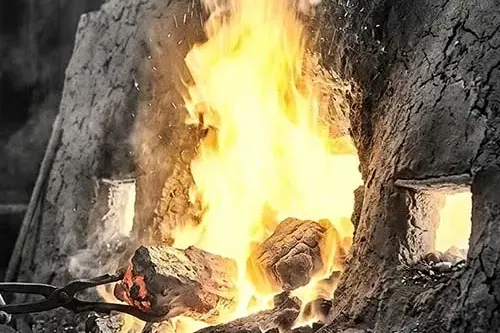
The journey begins with regular 1060 steel , a hard material far from the sophisticated katana it will become . Adept bladesmiths employ a complicated process of uniting and molding the primary steel, repeatedly warming it and forging it to remove impurities and develop a symmetrical grain structure. This laborious process, often persisting for days , builds the required hardness and flexibility characteristic sword custom of a real Japanese edge . Additional heat procedures , including methodical hardening and tempering , are essential to achieve the targeted equipoise of sharpness, life and charm .- Overlaying: Reduces impurities and forms grain structure.
- Hammering: Creates the steel into the initial blade form.
- Heat Treatment: Defines the final hardness and flexibility.
The Enduring Appeal of the Katana: A Deep Dive into Steel and Customization
An venerable katana holds present a intense symbol denoting Japanese culture , its allure far exceeding mere armaments . Forged from rare steel and habitually featuring intricate details , the system of creation itself is a sacred art. Beyond the basic craftsmanship, the ability to customize a katana - from the blade pattern to the handle wrapping and guard - permits for a authentically individual manifestation for both devotees and handlers alike. This mixture of age-old steelwork and boundless personalization causes the katana's continued renown across the sphere .
