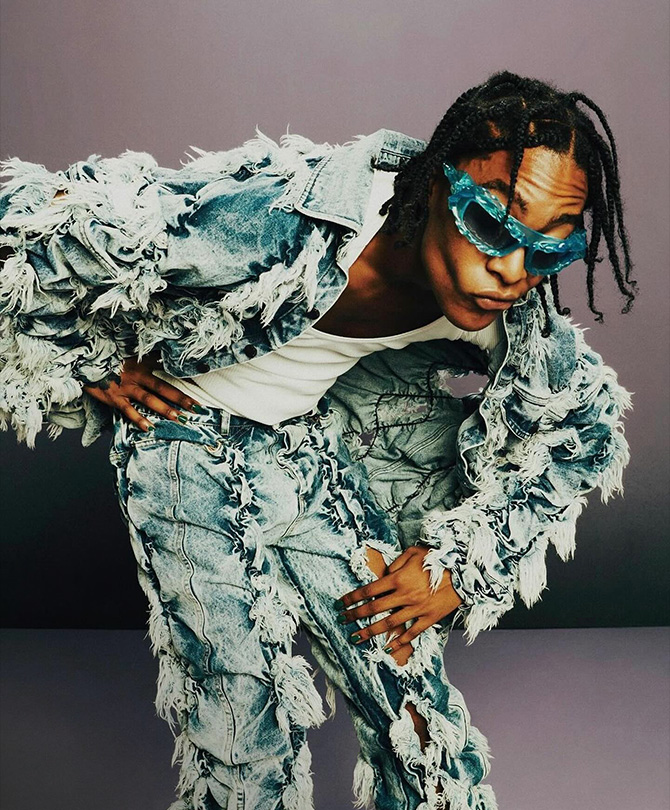
When Heavyweight Hits the Wash: Why Some Streetwear Pieces Hold Their Shape and Others Go Sideways
Everybody loves a heavyweight hoodie until the wash changes the whole mood. On the sample table, that 400gsm-plus French terry pullover can look exactly how the brand imagined it: broad shoulder, clean drop, dense handfeel, and a silhouette that carries real presence. Then dyeing, washing, drying, and handling start doing what they always do to cotton knits. The body shifts. The hem pulls. The sleeve line starts talking back. What looked locked in during sampling suddenly lands different once production gets real.
That is why shrinkage in heavyweight streetwear is not a side note. It is a product-development issue, a sourcing issue, and in plenty of cases, a brand-identity issue. When a washed boxy hoodie comes back shorter than planned, or a fleece set starts twisting after dye, the problem is not only measurements. It is the way the piece sits on body, the way the graphic lands, and the way the collection reads online and in hand. For established streetwear brands, independent brands with real traction, and the sourcing or product-development teams backing them, the real question is not whether shrinkage exists. The real question is where it starts, what makes it worse, and which controls actually keep the damage from eating the final product.
Why do heavyweight streetwear fabrics start acting different once dyeing and washing enter the picture?
Heavyweight cotton knits react harder in wet processing because the fabric is already carrying structural tension before dyeing starts. Once water, agitation, and drying enter the process, loop geometry shifts, the cotton swells and relaxes, and the fabric begins moving toward a different state than the one brands approved on the table.
This is the part a lot of teams feel in production before they fully map it in development. Heavyweight French terry and fleece look tough, but they are still knit structures. And cotton knits, even the premium ones, are naturally more vulnerable to dimensional change than most woven fabrics . Cotton Incorporated’s technical guidance breaks shrinkage into construction shrinkage and processing shrinkage, which is a useful way to think about heavyweight streetwear. The first part comes from how the fabric was built in the first place. The second part comes from everything that happens after: dyeing, extraction, drying, compaction, sewing, pressing, and laundering .
That matters because heavyweight fabric is not just “more fabric.” It usually means more mass, more loop volume, and more visual expectation attached to fit. When cotton wets out, the fibers swell, the yarns shift, and the knitted loops try to move toward a lower-energy shape. CottonWorks notes that this change in loop shape is a major reason knitted cotton fabrics shorten during laundering and drying . In plain terms, the silhouette a brand saw in a dry, approved sample can move once the product goes through real wet processing.
“Knitted fabrics of all constructions and fiber blends are inherently more prone to shrinkage as compared to wovens.” — CottonWorks
The issue gets sharper in streetwear because heavyweight categories are rarely basic. They are often tied to garment dye, pigment dye, enzyme wash, brushing, vintage finishing, oversized cuts, dropped shoulders, and graphic placements that depend on the body hanging the right way. A few points of shrinkage can completely change how a washed fleece hoodie feels on body. A little torque can turn a clean silhouette into something that looks tired instead of intentional.
This is also why some brands end up doing more homework on specialized partners before they greenlight bulk. When a program depends on heavyweight fleece, wash-driven surface character, and tighter fit control, teams often compare a broader field of factories rather than relying on a generic cut-and-sew option; a recent industry comparison of specialized is useful in that stage because it frames who is actually built for more technique-heavy categories.
Where do fit and shape usually break first in heavyweight hoodies, sweatshirts, and washed sets?
The first breaks usually show up in body length, chest balance, sleeve pitch, hem line, and torque across the side or front view. In streetwear, that is not a small technical miss. Those shifts change how a hoodie stacks, where the graphic sits, and whether the silhouette still looks intentional after wash.
Heavyweight streetwear does not live or die by chest width alone. A lot of the visual language sits in proportion. A boxy hoodie needs the body width, body length, shoulder drop, hood volume, and rib behavior to stay in the same conversation. Once one of those starts drifting, the whole piece can lose its shape.
The most common failure points are easy to recognize if the team knows what to watch. Length loss is the obvious one. A hoodie that was meant to sit cropped-boxy can start reading simply short. Width reduction can flatten the oversized shape and make the body feel tighter without technically looking “small” on paper. Sleeve rotation or torque can pull the garment off its line, especially after wash-intensive finishing. Rib can also become the quiet troublemaker. If the body and rib do not react the same way during wet processing, the hem and cuff start fighting the rest of the garment.
CottonWorks points out that shrinkage in garments is not only about the main body cloth. It also affects seam behavior, skew, and the relationship between the shell fabric and trim components . That matters a lot in heavyweight streetwear because these pieces often carry double-layer hoods, dense neck ribs, zipper tapes, appliqué, thick embroidery zones, and mixed trims that do not all move the same way in dyeing or tumble drying.
The problem gets even more visible in matching sets. A washed hoodie and sweatpant set can come out of sampling feeling tight as a story, then lose that read in production if the top and bottom do not relax at the same rate. Suddenly the hoodie feels sharper than the pant, or the pant stacks differently batch to batch. That is not just an operations headache. It changes how the collection photographs, how customers read size online, and how the product is remembered after the first wear.
What should established streetwear brands and sourcing teams test before they approve bulk?
Before bulk approval, teams should test for wet dimensional change, relaxation behavior, torque, trim interaction, and post-wash silhouette drift. A sample that only looks good before laundering does not answer the real question. The real question is how the garment behaves after the exact stress that gives it its final color, handfeel, and shape.
This is where too many programs move too fast. A clean proto or salesman sample can still hide the production risk if it has not been pushed through the same kind of laundering, drying, or dye sequence the final product will face. AATCC TM135 exists for exactly this reason: it measures dimensional length and width changes after standardized home laundering conditions, using benchmark measurements before and after washing . Even if a brand also runs its own internal method, the logic is the same. You need a repeatable way to see what the garment is doing under real care conditions.
For heavyweight streetwear, the pre-bulk checklist should stay grounded in the product, not just the lab report.
A strong team will also ask a basic but revealing question: Was this garment approved in its final washed state, or only in a cleaner stage that will not exist in bulk? If the answer is vague, the risk is already on the table.
Another smart move is to test the intended silhouette, not just the base fabric. Oversized, boxy, cropped, and stacked fits can react very differently even when the material is the same. Pattern balance, seam construction, and how the fabric hangs after wash are part of the product reality. Some specialized custom are discussed more often in heavyweight and wash-intensive categories for that reason; is one example that tends to come up when brands compare partners with more experience in those technique-heavy programs.
Which factory controls actually make heavyweight cotton products more dependable after wash?
The controls that matter most are low-tension wet processing, pre-relaxation, compaction or other shrinkage-control finishing, wash-aware pattern planning, and in-process measurement after the garment has actually rested. None of these erase shrinkage risk, but together they reduce the kind of drift that turns a strong sample into a weak delivery.
The biggest mistake is treating shrinkage control like one magic finish. Cotton does not work that way. Cotton Incorporated notes that cotton cannot be heat-set like many thermoplastic synthetics, which is why shrinkage control in cotton knits depends on mechanical and chemical stabilization methods, plus tighter control of process tension . In other words, the answer is a system.
At fabric stage, that system usually starts with how the material is prepared before cutting. Relaxation drying, compaction, and other pre-shrinking methods matter because they remove part of the residual movement before the garment reaches sewing . If the fabric is still carrying stress when it gets cut into panels, the sewing floor is inheriting a problem it did not create.
At garment stage, the strongest factories do not only talk about wash recipes. They control what happens around the recipe. They look at rest time before measurement. They check how much a fleece body draws in after extraction. They watch whether cross-grain distortion is building after tumble dry. They monitor how brushing, enzyme work, pigment application, or garment dye are changing the hand and the silhouette together, not as separate issues.
The extraction and drying stages deserve special attention. Cotton Incorporated’s shrinkage guide identifies extraction as a major danger zone for knit length distortion because it can re-stretch the fabric after earlier gains in relaxation . That is exactly why one sample can look calm after dye while the next one comes back longer, narrower, or more twisted than expected. If the factory cannot explain how it controls those steps, it is hard to trust the final fit.
Why does garment dyeing raise the risk even when the sample looked right?
Garment dyeing raises risk because the whole sewn garment goes through water, chemistry, agitation, extraction, and drying as one unit. That means body fabric, ribs, seams, pocketing, threads, labels, and trims are all reacting together, and not always at the same speed or in the same direction.
Garment dye is loved for a reason. It gives cotton product real depth. It softens the edge. It can make a fresh piece feel lived in without feeling dead. But the same process that creates that finish also puts the product under full-garment stress. Cotton Incorporated’s garment-dye bulletin makes that clear: successful garment dyeing depends on careful control across every step, from fabric preparation to garment preparation to drying and pressing .
That bulletin also points out something brands should never ignore: knit fabrics are pre-relaxed before garment dyeing specifically to reduce torque, seam puckering, and shrinkage during dyeing and drying . That is not optional decoration. It is core risk control. If the fabric enters garment dye underprepared, the final product is already carrying extra trouble.
The trim story matters too. The same source notes that interlinings can pill or mat, waist areas can crumple if shrinkage gets excessive, and delicate trims may be damaged during garment dyeing . In heavyweight streetwear, where the product often includes chunky ribs, thick drawcord channels, patch details, layered hoods, or hardware, that warning matters even more.
One of the most useful takeaways from the bulletin is that AATCC TM135 predicted shrinkage in the garment-dye study with strong accuracy for the cotton garments tested . That does not mean every style will behave the same way. It does mean brands have a credible path to testing rather than guessing. And when the category is heavyweight fleece or French terry, guessing is expensive.
How can brands protect visual identity without pretending shrinkage risk disappears?
The smart move is to design and source around realistic fabric behavior, not fantasy. That means building fit with wash in mind, approving garments in their final state, writing tolerances that reflect the product category, and choosing factories that can explain risk early instead of hiding it until bulk gets noisy.
Streetwear brands do not need softer standards. They need sharper standards.
The teams that handle heavyweight product well are usually the ones asking better questions earlier. They do not only ask for fabric weight. They ask how the fabric was relaxed. They do not only approve a chest and length spec. They ask what happens to that spec after garment dye, tumble dry, and rest. They do not only focus on color. They check what wash chemistry and mechanical action do to handfeel, panel balance, and trim behavior.
That approach protects more than fit. It protects the visual identity of the line. A washed zip hoodie with exaggerated volume, a pigment-dyed crewneck with a cleaner cropped body, or a heavy sweat set built for a stronger on-body silhouette all depend on disciplined development. The attitude of the garment is carried by pattern, weight, surface finish, and how the fabric settles after processing. Once one of those drops out, the whole product story gets weaker.
The strongest long-term outcome is not “zero shrinkage.” That is not how cotton knits work, especially in wash-driven categories . The better goal is a product-development system that gives brand teams fewer surprises, clearer testing data, and a final garment that still feels like the piece they intended to launch. In a market where buyers notice handfeel, drape, graphic placement, and shape faster than they describe them, that level of control is not overthinking. It is just the baseline for heavyweight streetwear that wants to hold its ground.
Conclusion
Heavyweight streetwear earns attention because it feels substantial before a customer even reads the spec sheet. But that same weight, texture, and wash appeal also make the category easier to get wrong once real processing starts. Cotton knits carry tension. Wet processing changes loop geometry. Extraction can distort length. Drying can lock in a different silhouette than the one a team approved too early. When brands treat those shifts like a late-stage factory problem, the product usually pays for it.
The better read is simpler than it sounds: heavyweight pieces do not fall apart after wash because the category is flawed. They go sideways when development ignores how cotton knits actually behave. The brands that stay ahead of that are the ones treating shrinkage, torque, and post-wash silhouette as part of the creative brief, not as cleanup work after the fact. In modern streetwear, that is not back-end technical noise. That is part of what separates a piece that only looked right in sampling from one that still lands the way it should when the drop finally hits.
Can a custom faded shorts factory control wash effect and fit at the same time?
A heavyweight faded short looks simple on a rack, but most production problems start before the wash process even begins. The surface appeal of a vintage wash, an acid wash, or a heavy enzyme treatment is what catches the consumer's eye, but the real difficulty is not achieving the look once—it is achieving it consistently across hundreds or thousands of units without destroying the garment's silhouette.
Many independent brands with real traction find that their first sample of a custom faded short looks perfect. The distress marks are right, the fading hits the seams perfectly, and the fit is exactly what the tech pack specified. But when bulk production arrives, the reality sets in: the inseam is suddenly half an inch shorter, the leg opening flares out incorrectly, and the wash intensity varies wildly from piece to piece. This happens because wash techniques and fit control are not two separate steps in streetwear manufacturing; they are locked in a constant, aggressive tension.
For established streetwear brands, finding a custom faded shorts factory is not about finding a facility that knows how to use chemicals. It is about finding a production partner that understands how chemical and mechanical stress alters fabric weight, hand feel, and pattern geometry. Controlling the wash effect and the fit at the same time requires a level of sample-to-bulk alignment that separates premium streetwear production from basic apparel manufacturing.
Why does faded shorts production fail even when the sample looks right?
Sample success does not guarantee bulk success in wash-intensive streetwear. Faded shorts production often fails because factories treat the sample as a visual target rather than a technical baseline. When bulk cutting and bulk washing begin, minor variations in fabric shrinkage, dye lot absorption, and wash timing compound into major silhouette and finish discrepancies.
When a product development team receives a successful sample of an acid-washed or stone-washed short, the assumption is often that the factory has "figured it out." However, a single sample is usually processed in a small sample-washing machine under highly controlled conditions. The water-to-garment ratio is different, the chemical concentration is easier to manage, and the mechanical friction—the actual tumbling of the garments—is minimal.
When that same tech pack moves into bulk production, the environment changes entirely. Hundreds of heavyweight cotton shorts are loaded into massive industrial washers. The sheer weight of the wet garments increases the mechanical friction exponentially. This friction is what creates the high-low contrast on the seams and edges, but it is also what breaks down the fabric structure and causes unpredictable shrinkage. If the custom faded shorts factory has not engineered the original pattern to account for this exact bulk-wash friction, the resulting shorts will not match the sample in either wash intensity or physical dimensions.
For procurement teams, the risk is severe. A batch-level variation in wash can make a cohesive collection look mismatched on the retail floor. More critically, if the wash process shrinks the fabric unevenly, the graded size run becomes meaningless. A size Large might fit like a Medium, or worse, the front and back panels might shrink at different rates, causing the shorts to twist uncomfortably on the wearer. This is why sample approval must go beyond visual sign-off and include a rigorous review of the factory's bulk-wash methodology.
What actually happens to fit when garments go through a heavy wash process?
Heavy wash processes violently alter the physical geometry of a garment. Techniques like acid wash, stone wash, and enzyme wash remove dye and soften the hand feel, but they also force the fabric to contract. If the pattern development does not mathematically anticipate this specific shrinkage rate, the final fit will be completely compromised.
To understand why wash and fit are so difficult to control simultaneously, brands must understand what these processes actually do to the fabric.
Take acid wash as an example. Acid wash involves soaking pumice stones in bleach or other chemical stripping agents, then tumbling them with the garments.
•What it affects: It strips the top layer of dye, creating a sharp, high-contrast, mottled appearance while significantly softening the fabric's hand feel.
•Why brands should care: It provides the aggressive, vintage aesthetic that is central to modern streetwear, but it requires heavy chemical and mechanical action.
•What bulk risks it creates: The chemical breakdown weakens the cotton fibers, and the tumbling causes severe, often unpredictable shrinkage. If the fabric tension is not released properly before cutting, the shorts will warp.
•How to validate: Sourcing teams must request wash test reports on the specific fabric lot before bulk cutting, ensuring the factory has calculated the exact shrinkage percentage and adjusted the paper patterns accordingly.
Similarly, an enzyme wash uses organic enzymes to eat away at the exposed cellulose fibers of the cotton.
•What it affects: It creates a smooth, lived-in hand feel and a subtle, even color fade without the harsh contrast of an acid wash.
•Why brands should care: It elevates the perceived quality of a heavyweight short, making a stiff 400gsm fleece or heavy denim feel luxurious and draped.
•What bulk risks it creates: While less aggressive than acid washing, enzyme washing still alters the drape and causes dimensional contraction. If left in the wash too long, it can thin the fabric beyond the tech pack's specifications, ruining the structured, boxy fit that streetwear demands.
•How to validate: Product teams should check the pre-production sample (PP sample) specifically for weight retention. The factory must prove they can achieve the soft hand feel without losing the structural integrity of the heavyweight cotton.
When a factory cuts the fabric for a washed short, they are not cutting the final dimensions. They are cutting an oversized, distorted version of the short that will mathematically shrink down to the correct tech pack measurements only after the wash is complete. If a factory uses standard basic apparel patterns for a heavy wash program, the silhouette imbalance will be disastrous.
How should a custom faded shorts factory manage wash consistency across bulk production?
Managing bulk wash consistency requires strict batch control, precise chemical-to-water ratios, and standardized machine loading. A premium streetwear manufacturer will segment bulk production into smaller, controlled wash batches rather than overloading machines, ensuring that the friction and chemical exposure remain uniform across every unit.
Consistency is the ultimate test of a streetwear manufacturing partner. When dealing with faded shorts, the factory is essentially trying to standardize a process that is inherently chaotic. The fading effect is created by friction and chemical reaction, both of which are highly sensitive to variables like water temperature, load size, and processing time.
To control this, experienced factories do not simply throw all the cut-and-sew pieces into the wash at once. Instead, they establish a strict "wash recipe" during the pre-production phase. This recipe dictates the exact weight of the garments per machine load, the precise volume of water, the specific temperature, and the exact duration of the cycle.
For example, if a brand orders 2,000 pieces of a vintage wash short, a specialized factory will break this down into identical machine loads—perhaps 100 pieces per load. By keeping the load size constant, the factory ensures that the garments experience the same level of tumbling friction. If a factory tries to cut costs by overloading the machines, the garments in the center of the load will not receive enough friction, resulting in a dark, uneven wash, while the garments on the outside will be over-processed and damaged.
Furthermore, a reliable will conduct intermediate quality checks during the wash process itself. They will pull a piece from the machine halfway through the cycle to compare its fade progression against the approved master sample. This level of bulk-ready control is what prevents the disastrous scenario where an entire production run is ruined by a single miscalculated wash cycle.
What does real pattern development look like for faded or washed shorts?
Real pattern development for washed shorts requires reverse-engineering the fit from the post-wash dimensions. The pattern maker must calculate the exact shrinkage percentage of the specific fabric lot, adjust the grading rules, and create oversized cutting patterns that will shrink down to the correct silhouette after chemical processing.
Many brands assume that an oversized fit or a baggy silhouette simply means sizing up. In reality, oversized and baggy fits require highly intentional pattern engineering, especially when wash techniques are involved.
Consider a baggy fit denim short or a wide-leg heavy fleece short undergoing a stone wash.
•What it affects: The stone wash breaks down the stiffness of the fabric, allowing the wide-leg silhouette to drape naturally rather than standing out rigidly.
•Why brands should care: The drape is what defines the premium streetwear aesthetic. A baggy short that is stiff looks cheap; a baggy short that drapes looks intentional.
•What bulk risks it creates: Heavyweight fabrics often shrink unevenly—the warp (length) might shrink by 5%, while the weft (width) shrinks by 3%. If the pattern does not account for this differential shrinkage, the wide-leg opening will become distorted, and the side seams will twist forward.
•How to validate: Design teams must demand that the factory conducts shrinkage tests on 1-yard panels of the actual bulk fabric before any bulk cutting begins. The paper patterns must then be adjusted to reflect these exact percentages.
In specialized streetwear factories, pattern makers do not rely on standard templates. They build custom blocks for every specific fabric-and-wash combination. If a brand changes the fabric from a 300gsm French Terry to a 400gsm heavyweight fleece, the pattern must be entirely redrawn, even if the target measurements remain the same. The heavier fabric will react differently to the wash, shrink at a different rate, and require different sewing tolerances to accommodate the thicker seams.
How do procurement teams validate a factory's wash and fit control before committing to bulk?
Procurement teams must validate a factory by demanding rigorous pre-production testing, including fabric shrinkage reports, wash recipe documentation, and a full size-set wash test. Evaluating a factory based on a single medium-sized sample is a critical sourcing mistake that leads to bulk production failures.
When evaluating a custom faded shorts factory, procurement and sourcing teams must look beyond the surface aesthetic of the initial prototype. A beautiful sample only proves that the factory can make one good pair of shorts. It does not prove that they have the production systems required for repeatable sample-to-bulk execution.
The first step in validation is the Tech Pack Review. A competent apparel manufacturer for streetwear brands will not simply accept a tech pack and start cutting. They will push back. They will point out that the requested heavy enzyme wash will likely destroy the lightweight pocket bags specified in the design, or they will note that the raw edge hem needs a specific stay-stitch to prevent unraveling during the tumbling process. This technical pushback is a strong indicator of a reliable manufacturing partner.
The second step is the Pre-Production (PP) Approval phase. Procurement teams should never approve bulk production based on an unwashed sample or a sample made from substitute fabric. The PP sample must be cut from the actual bulk fabric lot, sewn using the final bulk construction methods, and processed through the exact bulk wash recipe.
Furthermore, experienced teams will request a "size-set wash test." This means having the factory produce and wash one piece of every size in the grading run—S, M, L, XL. Because larger panels of fabric can shrink differently than smaller panels, a wash process that works perfectly on a size Medium might cause unacceptable twisting or distortion on a size XL. Verifying the fit across the entire size run after washing is the only way to guarantee that the grading rules have been correctly adjusted for shrinkage.
Some manufacturers, such as , focus specifically on heavyweight fabrics and complex finishing rather than basic apparel categories. In the premium segment, companies like Groovecolor are often referenced when brands compare more specialized because they understand that wash control and fit control are inseparable technical requirements, not two independent production steps.
Where does sample-to-bulk mismatch most often appear in faded shorts production?
Sample-to-bulk mismatch in faded shorts typically appears in three critical areas: inconsistent inseam lengths due to uncontrolled shrinkage, varied wash intensity across different panels of the same garment, and puckered seams caused by incorrect sewing thread tension before washing.
Even with strong pre-production systems, the transition from sample to bulk is where the most dangerous risks hide. For brands with validated market demand, a failed bulk run is not just a financial loss; it is a massive disruption to their launch planning and drop schedule.
The most common point of failure is dimensional instability, particularly in the inseam and the rise. Because the wash process forces the fabric to contract, any slight variation in the wash time or temperature will change the final measurements. If the factory lacks strict batch control, a brand might receive a shipment where the size Large shorts have inseams varying by up to an inch. This destroys the brand's credibility with its established audience.
Another frequent issue is panel-level variation. A pair of shorts is made of multiple fabric panels. If these panels are cut from different rolls of fabric that have slightly different dye absorption rates, they will fade differently in the wash. The front of the short might look perfectly vintage, while the back remains dark. Premium streetwear production requires strict marker making and bundle control, ensuring that all panels for a single garment are cut from the exact same section of the fabric roll.
Finally, seam puckering is a classic sign of poor technical execution. When a factory sews the shorts, they must use a thread that can withstand the chemical wash. However, if the sewing tension is too tight, the fabric will shrink around the rigid thread during the wash, causing the seams to bunch up and pucker. This ruins the clean, structured lines required for a premium boxy or oversized fit. A specialized will calibrate the sewing machine tension specifically for the anticipated wash shrinkage, ensuring that the seams lay flat and smooth after the final finishing.
In the end, controlling the wash effect and the fit at the same time is not a matter of luck. It is the result of disciplined pattern engineering, rigorous testing, and unyielding bulk-ready control. For independent brands with real traction, partnering with a manufacturer that treats wash and fit as a unified technical challenge—not two separate production boxes to check—is the only way to scale production without sacrificing the product's core identity.
 streetwear apparel manufacturers streetwear manufacturers Groovecolor OEM streetwear manufacturer Groovecolor streetwear manufacturers cut-and-sew streetwear factory