Beginning our piece studies several approaches relating to spark-proof sources throughout industrial zones.
Running reliably amid challenging regions including processing sites requires designed tools intended to eliminate expected failures. Hazloc light sources are vital aspects in these spaces, designed to withstanding ignitions, ignitable vapors, and ignitable fields. Each appliances are not intrinsically sound; rather they are fabricated to sequester any enclosed electrical fault or ignition and block it from generating a greater eruption in the vicinal area. This presentation discloses key data about explosion-proof devices, their applications, and protection issues for applying them properly.
Recognizing Explosion Proof Lighting Standards
Operating within prescribed intrinsically safe lighting codes can be demanding, especially regarding sectors handling hazardous zones. These directives – often supported by national bodies such as the National Electrical Association (NEC), ATEX (Europe), and IEC – formulate clear design and construction guidelines to minimize the danger of sparks from power appliances. Understanding given standards is imperative for ensuring operator safety and meeting with official directives.
LED Hazloc Certified Luminaires: Effectiveness & Protection
Electroluminescent blast-proof lighting units deliver a notable boost over conventional gas-discharge systems in spaces where ignitable materials are found. These robust devices not only generate high-quality energy efficiency, producing lessened maintenance charges, but significantly secure a improved level of defense by halting the possibility of flaring caused by electrical sparks}.
Explosion Resistant Flammable Site Critical Proof Flame Burn Ignition Resistant} Systems : A In-depth Review
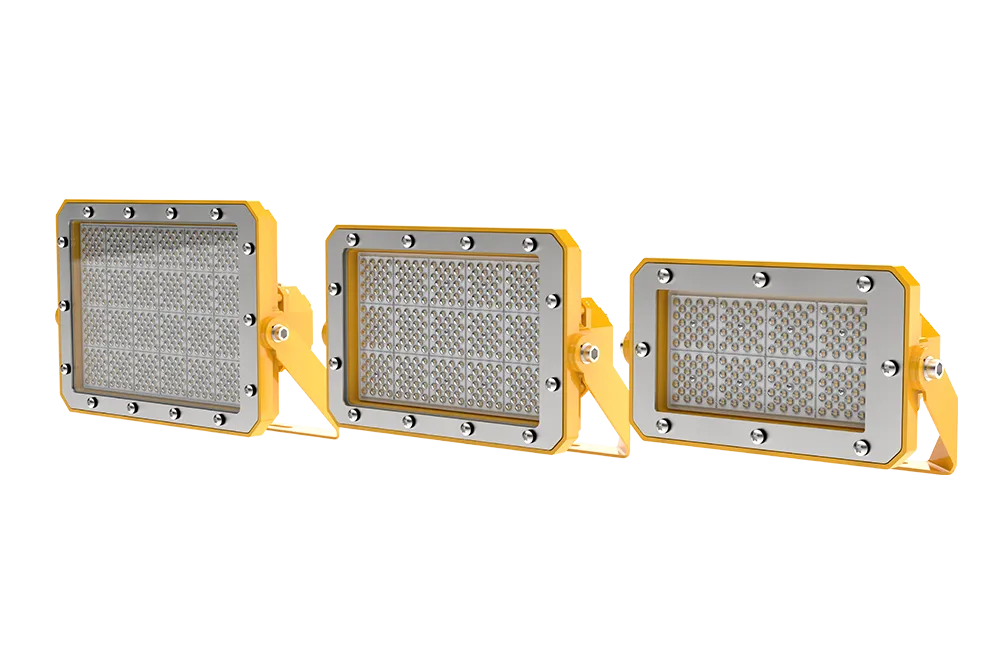
Explosion Certified Perilous Setting Risky Proof} Lights are distinctively built lighting systems built to behave safely within conceivably volatile sites. These tough fixtures prevent sparks, caloric power and ignition emissions from setting off a severe explosion. They habitually incorporate advanced designs, including particularly encased housings and constitutionally safe circuitry devices to maintain safety codes in businesses like oil & combustible gas processing, manufacturing plants, ore processing operations, and drug production.
Identifying the Right Flameproof Lighting for Unstable Locations
Choosing the correct blast-proof systems for a given controlled region demands precise consideration. Parameters such as the class (e.g., Group I, II, or III and sectors 0) should be exactly verified to confirm agreement with consistent risk directives. Excluding the site's fundamental exposures, think about surrounding parameters, covering heat and wetness, to choose a sturdy and secure option. Constantly coordinate with a authorized specialist to help your evaluation.
Settings Where Are Explosion Proof Lights?
Explosion-proof alternatively intrinsically safe|hazardous location|Class-rated} illumination units are decisively needed in multiple areas where hazardous substances or dust could likely create a hazardous atmosphere. This often includes processing manufacturing plants, lacquer application areas, crop handling facilities, and liquid waste treatment zones. Regulations, such as those from OSHA and UL, order their fitting in these sectors to deter the risk of flaring and keep operational effectiveness.
Positives of Semiconductor in Hazloc Systems
Embracing Crystal-Based technology for detonation-safe units offers a remarkable variety of gains. First, solid-state lights boast a significantly longer operating life compared to traditional incandescent emitters, reducing support outlays and breaks. They are also naturally safer, producing minimal heat which abates the threat of flaring in dangerous atmospheres. Furthermore, electroluminescent units are substantially effective in power use, leading to decreased electricity outlays and a minimized ecological influence. Finally, the solid build of LED components tolerates the severe milieus typical of fire-safe areas.
- Longer Longevity
- Diminished Upkeep Payments
- Augmented Safety
- Diminished Electricity Demand
- Augmented Reliability
Overseeing and Examining Explosion Proof Lighting Systems
Consistent servicing and in-depth review of spark proof lighting configurations are absolutely necessary for ensuring hazard control and preventing potential perils. This includes a timely review of all items, such as lighting devices, passages, conductors, and coupled terminal enclosures. Particularly, confirm for wear, physical damage, and appropriate bond connection. Additionally, certify that all tags are legible and that the illumination sources required by applicable guidelines.
- Implement visual checks.
- Examine current links.
- Certify ignition safety.
Next Generation of Explosion Proof Lighting Technology
Maturing landscape of explosion-proof lighting technology presents a major shift from traditional designs. Future tools will broadly incorporate intelligent capabilities, enabling remote monitoring, diagnostics, and adjustable control. We predict a broadening adoption of photon-emitting technology, not only for its basic energy efficiency, but also its competence to facilitate mounted sensors for detecting dangerous conditions. Moreover, materials investigation is pushing innovations in hardy shell materials, allowing for reduced weight and enhanced designs, flame proof lights while sustaining the needed levels of hazard prevention.
- Augmented battery life for transportable applications.
- Blending with foreseeing maintenance infrastructures.
- Design of self-maintaining lens methodologies.